
Welcome to the third and final round-up of 2025/26 of what the SPD team has been seeing, questioning and enjoying on stages and online.
Our Go and See and Write programme invited every member of staff – not just those in artistic roles – to spend time in theatres, encounter other artists’ work, and write honestly about what they experience.
Part of the purpose of this is watching work, supporting fellow artists, and sharpening our critical thinking. Every staff member is invited to see three productions during work hours and respond with a subjective reflection – not a polished critique. Later this year, we’ll gather as a team to reflect on what we’ve learned, how this work enhances our broader training, and explore what happens next.
This is the third of three blogs (check out the first one here and the second one here) which offers a window into what has been inspiring us, challenging us, and shaping our viewpoints.
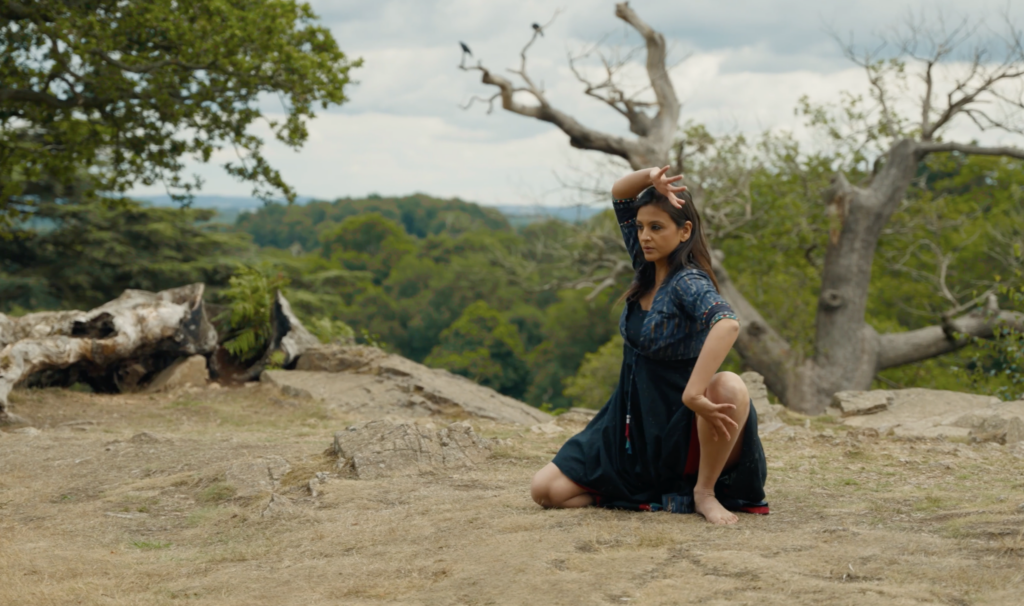
What: The Lost Breath x Jaikur
Who: Kesha Raithatha
Where: The Place, London
When: 27th March 2026
“Blending ancestral memory with present-day experience, Kesha weaves together the voices of South Asian women in Leicester, collected through intimate workshops and interviews. Drawing on prayer, animist journeys, and meditative practices, the performance transforms these forgotten histories into a celebration of resilience and visibility. This is dance as ritual, as reclamation – a performance that reaches beyond the stage and screen, into community and collective remembering.”
This piece has a captivating aesthetic that draws you in immediately through set and lighting. Visually intriguing and held together by Kesha’s commanding stage presence, it leaves a strong impression. The choreography is particularly interesting – a clear blend of everything that defines Kesha and the way her body naturally wants to move. She makes largely smart choreographic choices that suit her physicality, though the addition of some clear contemporary tricks do feel slightly out of place.
What lingers, however, is a deeper question: when a Brown body engages with themes of spirituality and ritual in Contemporary Dance, how much reflects a genuine, lived daily practice – and how much simply inherits an unexamined set of rules, expectations, and assumptions placed upon us by the White gaze? Aishani
https://theplace.org.uk/events/spring-26-the-lost-breath
What: London Marghazi 2026*
Who: London Adavu
Where: The City Academy, London
When: 21st March 2026
This weekend I watched 8 x 1hr long Bharatanatyam solos with live music over two evenings at the inaugural London Margazhi. Brainchild of Ami Jayakrishnan, this was a significant moment on many levels.
Having built a space for Bharatanatyam dancers to practise and share over several years, they recently set up as a CIC and secured their first ever ACE project grant. Sifting through 50+ applications of young artists to select 8 dancers, they paired them with young mentors and gave them the chance to share a long form performance with live music. No apologies, no watering down of presentation, just solid solo classical Bharatanatyam. This sort of space has never been carved out in the UK before, especially for young dancers based in the UK.
Each dancer offered something unique. For some this was their first time working with live music, but they handled it with grace and with the support of their mentors. Ranging from more traditional repertoire pieces to newer explorations of themes such as grief and maternal relationships, these dancers and the whole festival had me fizzing with hope for the future of Bharatanatyam in the UK.
In my gut it feels like this is just the beginning and it should be full steam ahead for this annual festival series. London Marghazi should be supported by funders, the sector, and audiences, and recognised for the meaningful impact it clearly makes. Seeta
https://thamarai.com/events/culture/london-margazhi-two-day-carnatic-bharatanatyam-festival
*Seeta Patel Dance offered a small financial sponsorship to help cover studio costs and event hire for the fundraising events and rehearsal costs in the run up to London Marghazi 2026.
What: Shri Rama: The Prince of Ayodhya
Who: Shruti Arts
Where: Fairfield Halls, London
When: 21st March 2026
Shri Rama: The Prince of Ayodhya is a story of deep cultural and spiritual significance, and its retelling in musical form felt especially meaningful for those within the Hindu community.
A community choir occupied the stage, led by a standout male vocalist. Above them, a projection screen displayed images and clips of each scene which were introduced by a narrator before being performed in Hindi. I was fortunate to be seated beside a kind woman and her mother, who offered explanations before, during, and after the performance. Their insights greatly enriched my experience, and through them I could sense both a deep joy in seeing this story brought to life. Without their guidance, and a running commentary from another audience member behind me, I would have struggled to follow the narrative.
Onstage, performers mimed to a theatrical voiceover, bringing the story to life. Some costumes were striking and visually engaging whilst others were noticeably less polished. At one point, a scene involving the monkey character was unintentionally disrupted when a prop sceptre broke apart mid-dance, with part of it rolling into the audience.
The singing was consistently beautiful, and the choreography, though simple, complemented the tone of the piece. Overall, the experience was gentle and enjoyable, carried by a strong sense of community spirit.
There were occasional technical inconsistencies, such as lighting cues that cut scenes short and projected visuals that looped awkwardly without clear transitions. However, the evening remained warm, welcoming, and genuinely enjoyable. It offered me not only a glimpse into an important cultural story, but also an uplifting sense of togetherness. Adam
What: London Marghazi 2026*
Who: London Adavu
Where: The City Academy, London
When: 21st March 2026
London Marghazi 2026 was curated with stalls spanning from jewellery to sarees, food and mehendi which created a lovely atmosphere in the venue. I enjoyed the relationship between artist and mentor; it was clear the artists had been given space to hone their craft and create their one hour on stage for themselves.
One of the performers explored the grief of losing her mother – and while the abhinaya was not to my preference – I enjoyed how she used different music and explored her creativity. Our company artist Adhya did an incredible job of navigating her performance through explorations of pieces she enjoys and finding a deeper connection to Bharatanatyam.
It felt like a homecoming—watching a classical margam in London conducted through a sustainable financial model, rather than just by those who can afford it. Three dancers were born and raised in the UK and five abroad and it begs the question: what made the training of the UK dancers as high-standard as those filtering in from abroad? London Adavu created a safe, beautiful, and enriching space that uplifts dancers rather than enforcing a rigid idea of “classical” onto them. Aishani
https://thamarai.com/events/culture/london-margazhi-two-day-carnatic-bharatanatyam-festival
*Seeta Patel Dance offered a small financial sponsorship to help cover studio costs and event hire for the fundraising events and rehearsal costs in the run up to London Marghazi 2026.
What: Death of England: Michael
Who: National Theatre at Home
Where: Online
When: 6 March 2026
“Death of England: Michael” is a gripping, high-energy solo performance that feels less like a traditional play and more like being inside someone’s head during a moment of emotional rupture. Written by Clint Dyer and Roy Williams, it is performed as a monologue and it drops you straight into Michael’s raw, unfiltered and often uncomfortable world.
From the moment it begins, you’re pulled into Michael’s stream of consciousness at what initially seems like a wake for his father. What unfolds, though, is far more chaotic and revealing. Michael is loud, funny, defensive and deeply conflicted. As he talks, rants, dances and drinks, you piece together the contradictions in his identity: he’s a white, working-class man grappling with grief, masculinity and what it means to be “English” today.
Having watched it, what stuck with me is how the tone constantly shifts. One moment you’re laughing at his crude humour and the next you’re confronted with flashes of vulnerability, anger and confusion. His relationship with his father is complicated, emotionally distant and tied up in ideas of race, loyalty and generational attitudes.
The staging is minimal but dynamic. It feels intimate but also explosive, like he might lose control at any second. By the end, I was left with a sense that I had witnessed someone unravel. Overall, the experience was intense and immersive. It left me thinking about race, friendship, nationalism and how people construct their identities in a divided society, especially in a post-Brexit England. Vicky
https://www.youtube.com/watch?v=twGLLczkKdo
What: Sweetmeats by Karim Khan
Who: Presented by Tara Arts and Bush Theatre
Where: Bush Theatre, London
When: 07/02/26 – 21/03/26
Sweetmeats, a co-production between Bush Theatre and Tara Theatre, tells the story of Hama and Liaquat, an Indian woman and a Pakistani man in their sixties. The two, seemingly opposites in attitude – Hama rigorous and restrained, Liaquat messy and laid-back – meet on a Type 2 diabetes management course and strike up an unlikely friendship that unfolds into romance with genuine tenderness.
The piece is both heartwarming and funny, with humour emerging naturally from their differences and growing connection. The multilingual conversations (switching between English and Hindi) and the culturally specific jokes and music are welcomed enthusiastically by the audience, creating a sense of shared experience even when not every reference was familiar to me. The large and composite set, which holds together many locations at once, can feel somewhat overwhelming for a two-hander, but it ultimately works well in creating a rich, multifaceted view of the characters’ lives.
That said, the pacing occasionally drifts. Some scenes linger longer than needed, and the piece would benefit from a tighter dramaturgical hand to maintain momentum. Still, its warmth and sincerity carry it through. Vittoria
https://www.bushtheatre.co.uk/past-event/sweetmeats/
What: U>N>I>T>E>D
Who: Chunky Move
Where: TPAC, Taiwan
When: 19/11/25 – 20/11/25
U>N>I>T>E>D by Chunky Move (Australia) is a piece of “large scale” (6 dancers) dance with an elaborate and aggressive technical set up and production frame. Filled with descriptions like: “A world of mythic proportions, where earthly forms commune with the gods of the machine world.” My audience reality was somewhat different.
U>N>I>T>E>D is made only to exist on screens, reels and Instagram. It’s clipped up, edited and consumed to sell a spiritual cyborg aesthetic, but it’s an emotionally empty experience. It’s conceptually closer to The Wizard of Oz. After the performance has finished and you get to see the prosthetics and exo-skeleton suits up close, you realise how cheap and plastic everything was.
It felt like half of the show (Artistic Direction and Choreography by Antony Hamilton) was watching dancers trying to clunkily get in and out of their costumes and ride the central rail with a mono sonic landscape and throw everything at it LX and sound design.
On the CM website, they have a phrase which is “Future Historic Dance” moves about the screen like an angry ticker tape instruction. The aesthetic and bombast fit of the work and statement fit, but this work will only enter the historic canon of what happens when aesthetics and vibes are prioritised over everything else. Ian
https://www.youtube.com/watch?v=DZ-O4_8lz9s
https://tpac.org.taipei/en/program/1314
What: Alterations
Who: National Theatre at Home
Where: Online
When: 18 March 2026
Watching “Alterations” feels like being pulled into a single, relentless day in the life of a man trying to hold everything together and slowly realising he can’t.
The play centres on Walker Holt, a skilled tailor working in a small London shop. Over the course of one night, you watch him take on an urgent, high-pressure job that could change his future, which is to alter a batch of suits for a client who might finally offer him financial stability. At first, there’s a sense of hope that this could be his break. But as the night unfolds, that optimism starts to unravel. Customers, friends and people from his personal life keep arriving, each bringing their own demands, distractions and emotional weight. What you see is Walker being pulled in every direction until it becomes clear that success isn’t just about talent or hard work. It’s also about what you’re willing, or forced, to sacrifice.
Walker’s ambition clashes with his responsibilities and identity as a Black British man in 1970s London, and the cost of “getting ahead” becomes painfully clear.
The final moments left me with a sense of unease rather than resolution as I watched someone come close to grasping an opportunity, only to see how fragile that opportunity really is. I found this play intense, fast-moving and intimate, almost like you’ve spent the night in that shop yourself, watching everything slowly fall apart. Vicky