What happens when communities make art together? Something remarkable.
Seeta Patel Dance has spent the last few years in deep thought. In these fractured times of polarisation, division and othering, how can we learn from the solidarity movements and social action of the past? How can we come together to create a shared sense of belonging and civic identity? From that provocation came an idea: Anatomy of Solidarity, a community-led project that is both artistically driven and socially purposeful.
Because solidarity is not a fixed thing. It fractures, shifts, and hardens depending on who holds power, who feels threatened, and who gets left out.
Anatomy of Solidarity set out to understand that framing, and cautiously, to challenge it. Not by lecturing. Not by presenting arguments. But by creating the conditions for a different kind of encounter altogether.
Community co-creation in practice
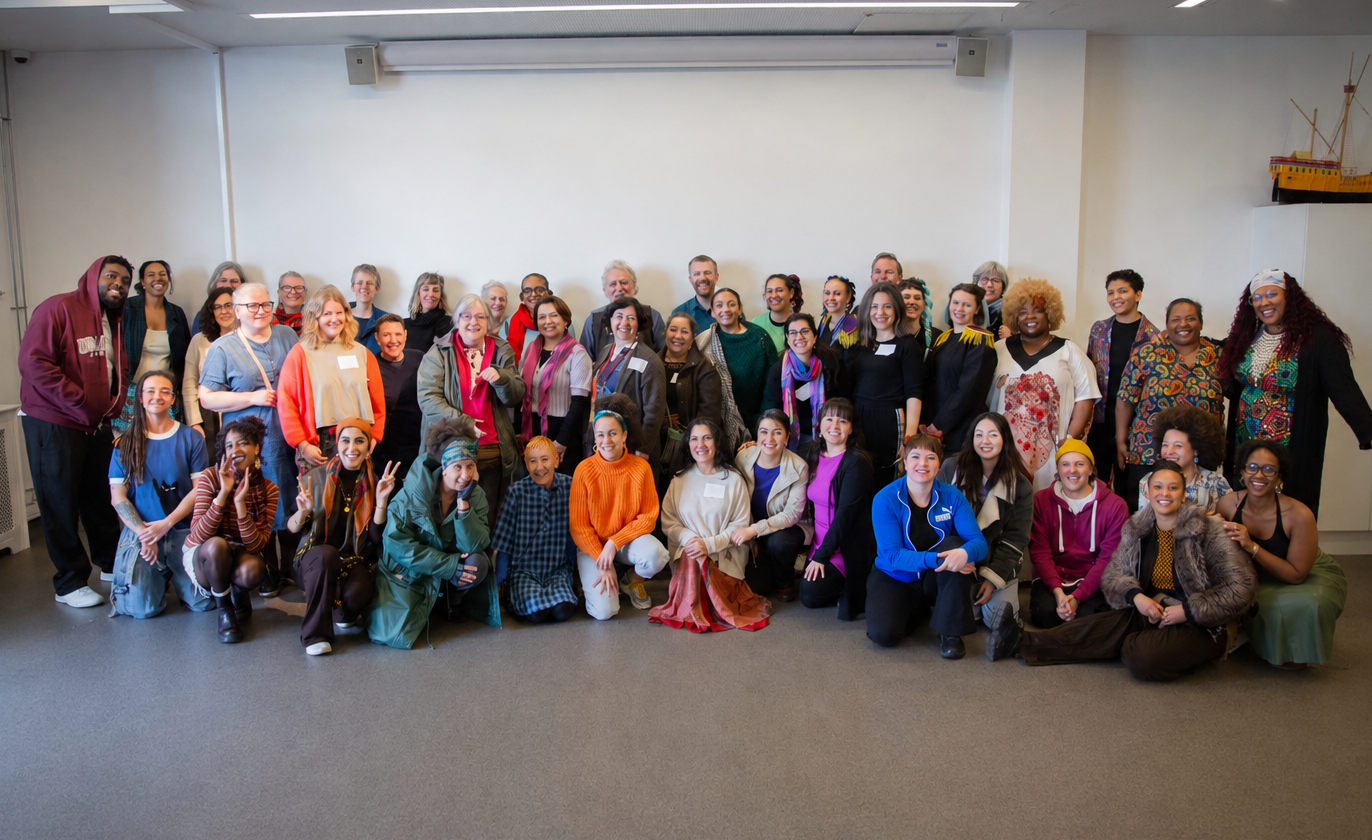
In November 2025, something joyful began in Bristol. Fifty-nine people – from Latin American women navigating questions of belonging, to a collective questioning the city’s role in the arms trade, to people living with mental health challenges – came together to make art. Not to be taught. Not to perform someone else’s vision. But to ask a question that turned out to matter deeply: what does solidarity look like today?
The project had three aims: to co-design the work with participants; to surface and connect with Bristol’s deep history of social movements; and to produce original artwork of quality for public exhibition. All three were met and in many cases, were exceeded.
Over several months, four community groups worked with skilled artist facilitators using printmaking, embroidery, visual art and dance to create original work that would be publicly exhibited at M Shed, one of Bristol’s largest public museums.
The four groups included creativeShift & St Pauls Printmakers, who worked with artists Barbara Disney and Ruth Ramsay to explore the symbolism of emblems. They collaborated on a large multi-panelled skirt featuring printed and embroidered designs that reflect the multifaceted identity of Bristol.
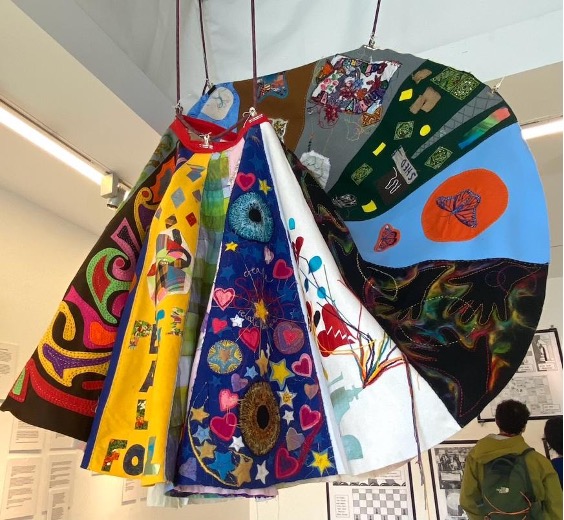
The creativeShift & St Pauls Printmakers ‘whirling Dervish’ Skirt.
Facilitated by Yanet Ramirez, Latinas in Bristol utilised the tradition of arpilleras, and embroidered textile panels. Drawing on the medium’s history as a tool for political resistance, participants created works interpreting the contemporary face of solidarity within the city.
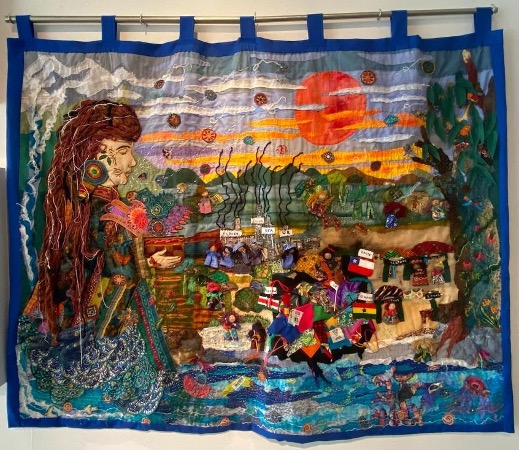
Pachamama Suyanan by Yanet Ramirez. One of the Arpilleras created by Latinas in Bristol
An anonymous collective grouped together to form the Art Against War Club. They interrogated the tensions between Bristol’s reputation as a sanctuary for protest and creativity and its prominent role in the defence industry.
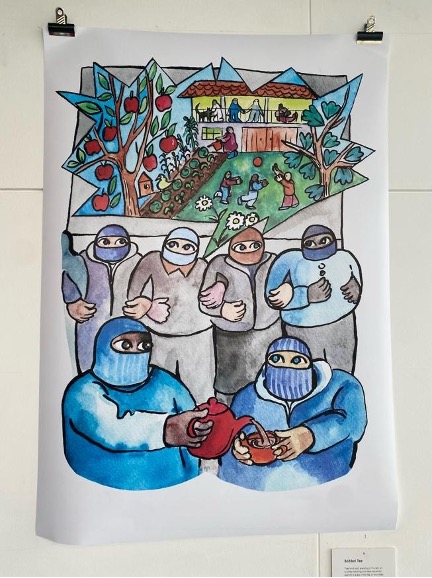
SolidariTea by the Art Against War Club
And Movema’s World Fusion collaborated with K-Pop artist Coco Yeonsoo Do. This intergenerational group explored the cultural significance of K-Pop for the Korean and East Asian diasporas. Their work focused on sharing heritage through dance, resulting in performances for Lunar New Year and the project’s final celebration.
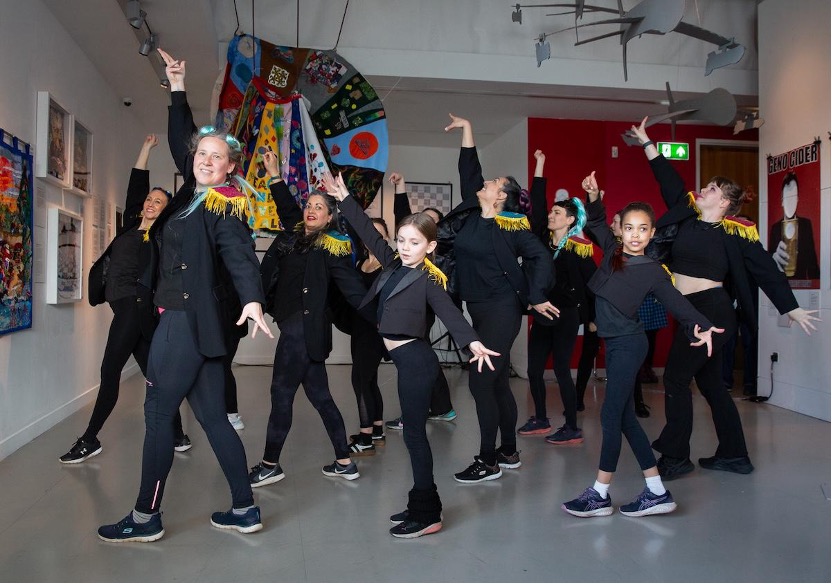
Movema’s K-Pop dance performance at the celebratory event, M Shed. Photo by Mark Simmons.
Over the duration of the exhibition more than 45,000 people attended the work, setting a powerful reminder that community-made work, when given the right platform and support, can hold its own in any public space.
“In many previous narratives about socially engaged practice, people frequently articulate a problematic idea that there needs to be a balance between community involvement and quality – as if the two are somehow at odds. Anatomy of Solidarity is a shining example of how authentic co-creation ensures high quality, relevant and purposeful artwork.”
Dr Roz Stewart Hall – Independent Evaluation Report, April 2026
Made with hands, hearts and purpose
Every participant rated their personal aims as fully achieved, from wellness and creative achievement to community building and skills development. For Faviola, a participant with Latinas in Bristol, the project offered something harder to measure:
“It can be challenging to find a space, as an immigrant, to find ‘our’ new place. Creating something tangible together, with our own hands, has been empowering and to see what we can achieve helps to build our confidence.”
And there was joy, which was shared together at the final celebration event.
“There was much joy and that’s really important. Bringing smiles and happiness to people at that moment. That’s why I work in a community organisation.”
– Melody Beard, Movema World Fusion
When censorship became part of the work
However, not everything went smoothly and that turned out to be important too.
The Art Against War Club created a body of work interrogating Bristol’s role in the arms trade. Following a complaint, M Shed removed part of the exhibition without our permission or consultation. The group’s response: they cut out the censored sections, making the absence visible, so that the act of censorship itself became part of the work.
“Being censored was a surprise but also a gift in terms of campaigning and led to many other activities. More than if it hadn’t been taken down.”
– Participant, Celebration Event
The story made the press and the conversation spread far beyond the gallery walls. What could have been a setback became one of the project’s most powerful moments and has led to institutional change at M Shed and Bristol City Council who manage the gallary.
What comes next
The first phase is over. The appetite for more is unmistakable.
“I would like to see more people involved – more people to be aware and open to different ways of doing things. I would like each one of us to feel connected.”
– Participant, Celebration Event
Anatomy of Solidarity is now seeking support for a second phase to bring this model to new communities across Bristol and UK, deepen the relationships already formed, and continue making work that is both artistically serious and socially vital. Because when the conditions are right, community art doesn’t have to choose between inclusion and excellence. It can be both.
by Rae Lee, Seeta Patel Dance, Executive Director