
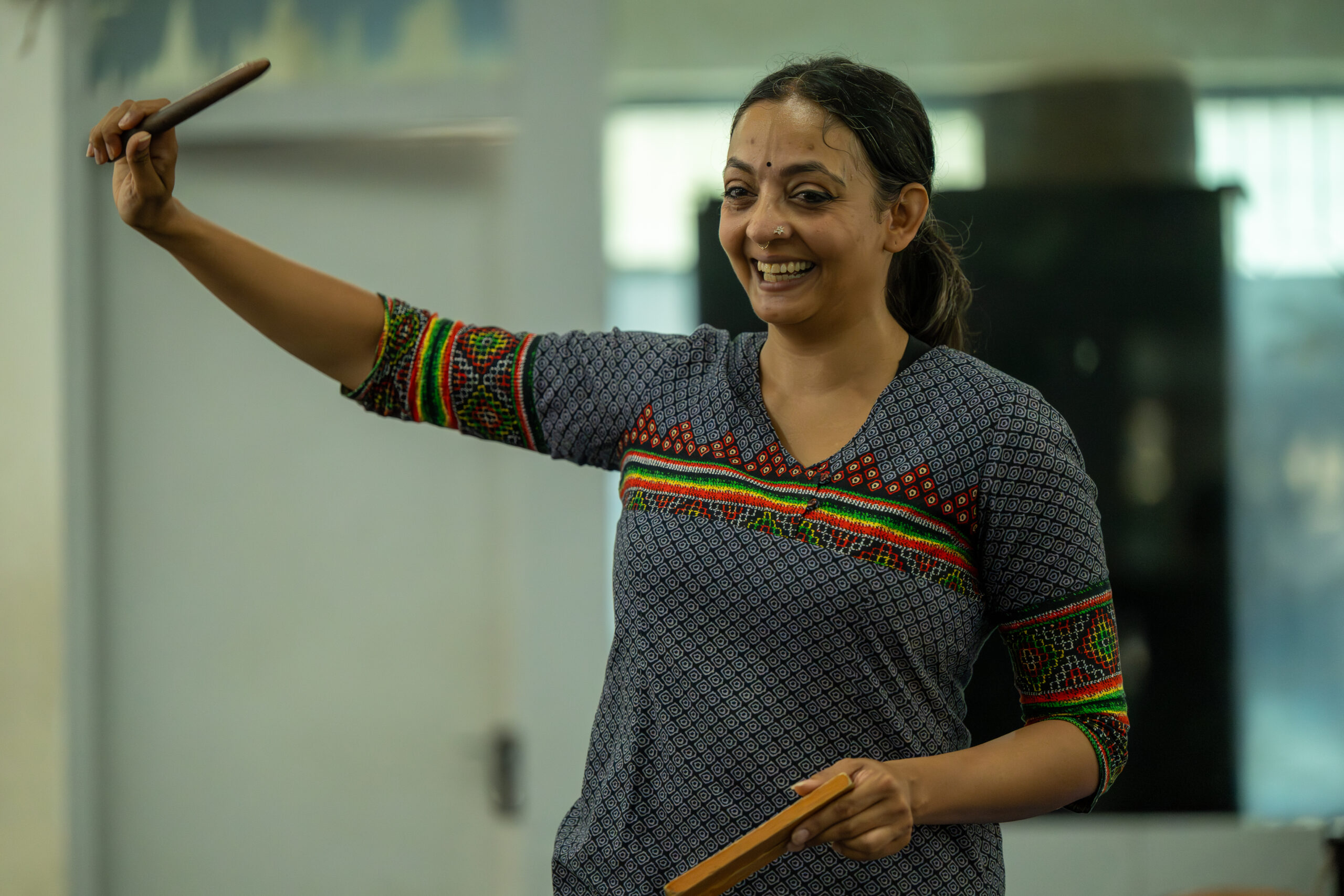
Ian Abbott, September 2026.
Introduction:
Over the last 12 months, SPD has been testing and refining what it delivers in terms of a pedagogical programme in Bharatanatyam technique and critical thinking. We’ve been asking the question “What is it that we can offer that is of value and that is different to others?”
During this time we’ve delivered masterclasses in the UK, a week long residency in Switzerland, a month long commission for Trinity Laban BA2 students, a 5 city tour in India teaching parts of The Rite of Spring and from September 2026 we’re offering a new weekly advanced level technique class in London.
It’s only by doing this and delivering it again and again to dozens of people that we’ve been able to see patterns emerge and how participants begin to reflect back the value and excellence that SPD offers to India, UK and diasporic Bharatanatyam communities.
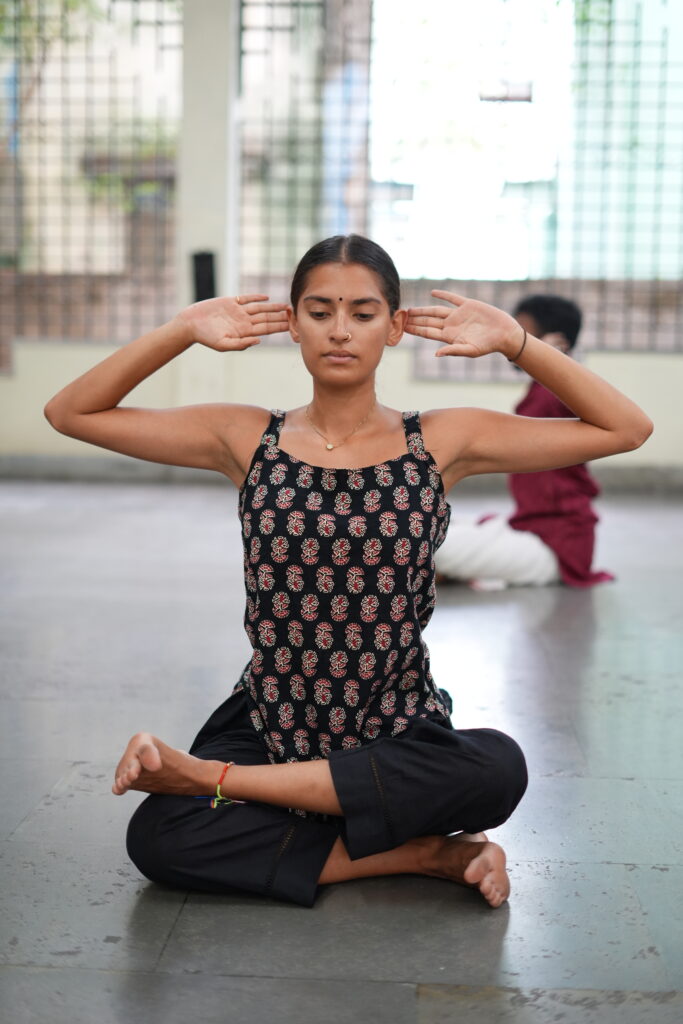
Classical Technique, Contemporary Thinking:
A lot of this delivery has been undertaken by Seeta and Company Artist Aishani Ghosh, so woven into this are some of their quotes from when they’ve been teaching as well as responses and testimonials from those who’ve participated in the sessions in India and Switzerland.
We were at a point of “thinking-in-progress” during our away days in May when we raised the idea of “pedagogical solidarity” and how our approach (as the only UK Bharatanatyam led company) is non-hierarchical. We’re interested in reshaping the traditional teacher-student relationship and bridging Indian and UK cultural contexts.
In her reflections from Pune at the end of August, Seeta wrote: “Refreshing is a word that has been used a lot over the course of all the workshops in India. I think many students have found it surprising that it was so rooted in Bharatanatyam and that my knowledge of Bharatanatyam was sound and technical – even though we constantly say this in interviews and social media etc. Maybe it’s the costumes or the music used in The Rite of Spring that confuses people into thinking the dance is contemporary in some way. Aishani identified that the dance is actually all Bharatanatyam, but the thinking is contemporary.”
The feedback we received from the participants in India backed this up with comments like:
“I learnt how impactful a precise, research driven approach to dance and choreography can be. It opened my mind to the myriad of possibilities within a form that is familiar to me.”
“The workshop was so detailed, it was a humbling experience for me as a dancer. We were not just learning choreography, but learning the intention behind it. I loved how Seeta akka genuinely corrected and shared her intention behind each step.”
“I realised how differently Bharatanatyam moves in response to Western classical music and I was completely blown away by Seeta’s vision for group choreography.”
Discussions and Hierarchy:
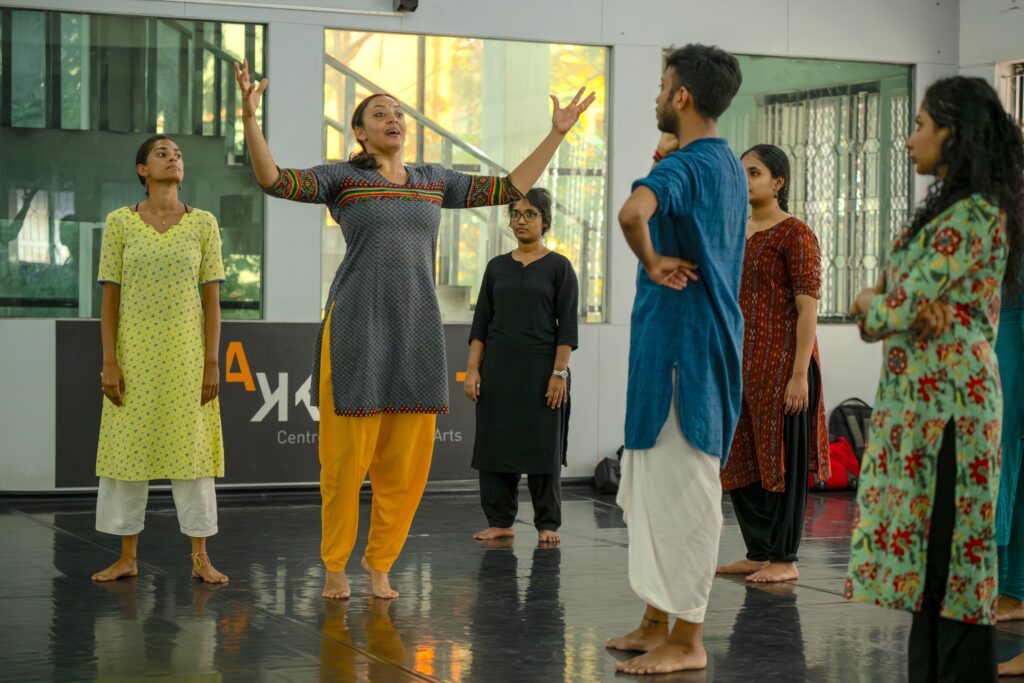
One of the things we’ve been making space for before and after these events is to offer a space for a rich set of discussions; people fed back to us how rare it was to engage in a dialogue with such honesty. We would often talk about the frictions and issues related to guru-shishya relationships and it’s clear there are real and very deep rooted issues that affect dancers in India and in the diaspora.
Aishani reflects on the workshop in Chennai: “It is incredible to dance in the city where Bharatanatyam is from. On the first day, we felt a slight resistance in the minds of the participants – not that there were any verbal or physical indications – but an energy. Maybe this way of working is SO different from the ecology of Bharatanatyam that they recognise, however by the second day they flourished. We held a talk that was about negotiating identities, contemporaneity and growth within the industry, and people were very interested to see The Rite of Spring, because they think it would disrupt what Chennai normally sees and classify as Bharatanatyam. Many of the participants want to dance full time but there is not the infrastructure, therefore most dancers look abroad or stick to the guru shishya model where they feel stuck.”
Having SPD seen as an “international” company and Seeta being perceived as a senior artist in the field, we are consistently relieved that the honesty and discussions are so welcomed. We got the impression that many students in India are used to workshops by senior artists being much more hierarchical and didactic. Whilst there is a clear structure, knowledge transfer, and encouragement through what SPD are delivering, there was joy, honesty and groundedness in the dialogue we had that supported that.
Community and Infrastructure:
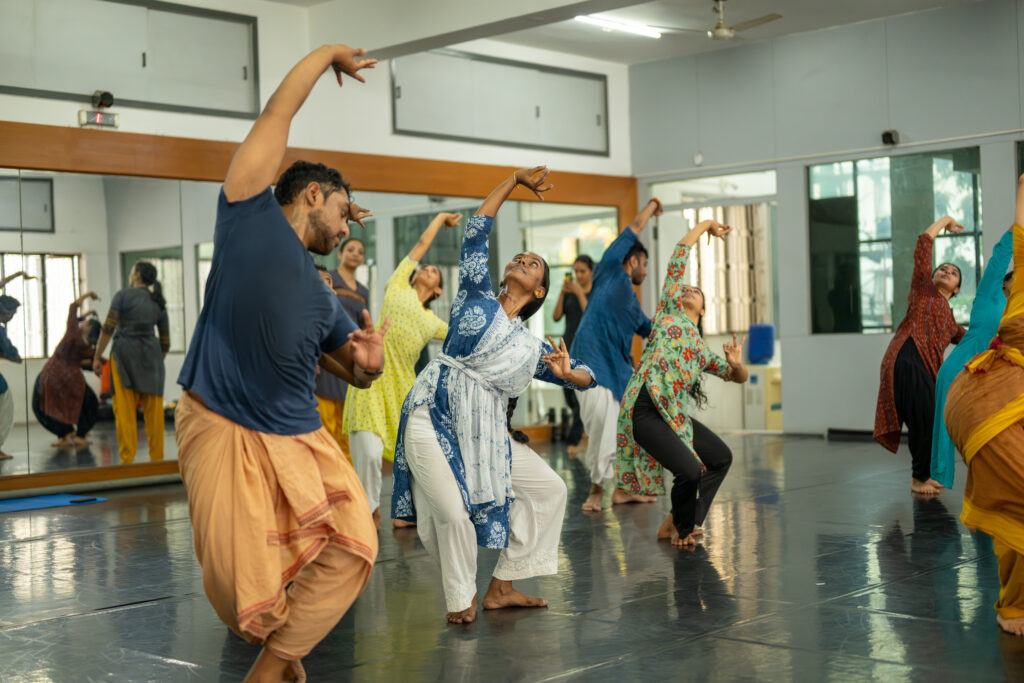
Seeta was invited by Josephine Ramya from InBa to lead a week-long residency in Switzerland in April, with participants that were Bharatanatyam students or practitioners from across Europe. Among them included some women who had been building some sort of infrastructure, school or Bharatanatyam practice that was in service to their community rather than to just themselves.
This is a growing area of interest for us, because there are so few residential and reflection spaces for female leaders, who’ve built something from the ground up, to come together to share deeply, laugh, cry and be seen by peers. Whilst Seeta led a daily practice and constructed the week’s activities, she also shared her experiences and knowledge around the form and how it is perceived from a diasporic perspective. Some of the feedback was so heartening to receive:
“There is a common misconception, especially surrounding dancers who move abroad, that we must step outside traditional frameworks, seek “newness,” and constantly reinvent in order to demonstrate the evolution of the art form. I often found myself questioning whether I needed to train in multiple styles to truly connect with audiences or to feel heard. It was at this point in my journey that the intensive with Seeta arrived. I had begun to wonder whether incorporating theatre or contemporary techniques was necessary to create relevant, modern work within Bharatanatyam. What became clear through this experience, however, was that the grammar of Nātyam itself is inherently complete and capable of generating deeply evolved work.”
“I am a Bharatanatyam dancer from India, living in Spain for the last 6 years, a country where the art form is not known, unappreciated, and the lack of a community and artistic development has been demotivating. Whilst I have been occupied with teaching beginner level activities, the mentorship sessions with Seeta has been incredibly helpful in bringing back the connection with my own practice and re-ignited the spark for working towards personal artistic growth. Seeta was very generous in sharing her experiences and creative thought process and I resonated deeply with her approach to movement and musicality which has now inspired me to work on my basics with more awareness.”
Conclusion:
As a company, SPD is interested in a pedagogical approach that prioritises a depth of approach, critical discussions of what excellence in the form might look like and building spaces for female community leaders to come together to rest, reflect and recharge. We’re less interested in taster or introductory workshops as we recognise there are many other artists and companies who already do that work and are brilliant at it.
It feels like there’s an interest in how SPD continues to approach pedagogical Bharatanatyam contemporaneity, but this is often mixed with a fear from gurus who often determine how students “should” think and they are made to feel “wrong” when they want to try new approaches. Tradition can sometimes feel stifling, but it’s needed as a grounding force. If you’re interested in building these spaces with us, please get in touch.